REVIEW · SAMARKAND
Panjakent day trip from Samarkand
Book on Viator →Operated by Discoverystan · Bookable on Viator
One border crossing, five ancient sites. This Panjakent day trip from Samarkand strings together Sogdian ruins and key Tajik cultural stops in about 6–7 hours, with an air-conditioned vehicle and lunch included so your day stays comfortable and efficient. It’s a good way to swap Samarkand’s grand monuments for smaller, older layers of the Silk Road story.
The main thing to consider: Panjakent is not Samarkand. If you’re chasing huge, perfectly preserved showpieces and long time on site, you may feel the day is more of a focused sampler than a slow wander.
In This Review
- Key things to know before you go
- A Silk Road day that feels different from Samarkand
- The Mausoleum of Mukhammad Bashoro: medieval architecture outside the main bustle
- Ancient Panjakent: seeing the Sogdians in the real place they built
- Panjakent Bazaar: a short hit of daily life (and why it’s worth doing)
- Rudaki’s museum: poetry, columns, and a calm break from ruins
- Sarazm: a 3500 BC starting point you can actually see
- How the 6–7 hour format stays worth it
- Price and value: where the $150 actually goes
- Who this trip suits best (and who should think twice)
- Quick tips to get the best day out of it
- Should you book the Panjakent day trip from Samarkand?
- FAQ
- How long is the Panjakent day trip from Samarkand?
- What does the $150 per person price include?
- Are admission tickets included?
- Do they pick you up in Samarkand?
- Is it a private tour or a shared group?
- Do I get a mobile ticket?
- Is alcohol included with lunch?
- What happens if the weather is bad?
- Can I cancel for a full refund?
- When do I receive confirmation?
Key things to know before you go
- Air-conditioned transport + lunch make this a smoother full-day outing
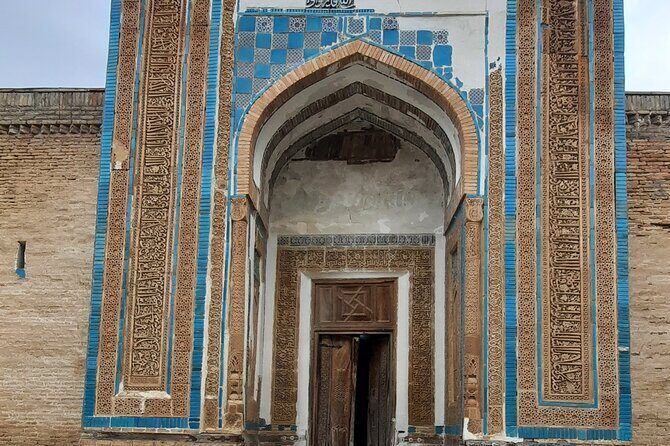
- Mausoleum of Mukhammad Bashoro gives you a dramatic medieval stop near Panjakent
- Ancient Panjakent lets you walk the early Middle Ages footprint of the Sogdians
- Panjakent Bazaar is a short morning taste of local market life
- Rudaki museum connects the area to Abu Abdullah Rudaki, the father of Persian poetry
- Sarazm adds the big scale moment, with a site founded around 3500 BC
A Silk Road day that feels different from Samarkand
A Panjakent day trip is one of those plans that changes the mood fast. Samarkand can make you think you’ve seen the “best of the best.” Then this route nudges you toward a different kind of value: the human scale of smaller places, where the story is built from ruins, monuments, and everyday life.
You’re moving efficiently between stops, but it’s not a “drive-by” route. Most of the day is spent at sites that explain who lived here, why the region mattered, and how far back the roots go.
Also, the timing works well. At roughly 6–7 hours, you can do this without wrecking the rest of your travel day in Samarkand.
A few more Samarkand tours and experiences worth a look
The Mausoleum of Mukhammad Bashoro: medieval architecture outside the main bustle
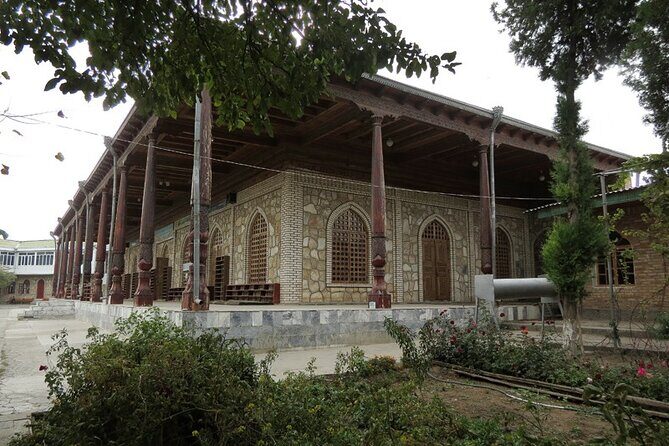
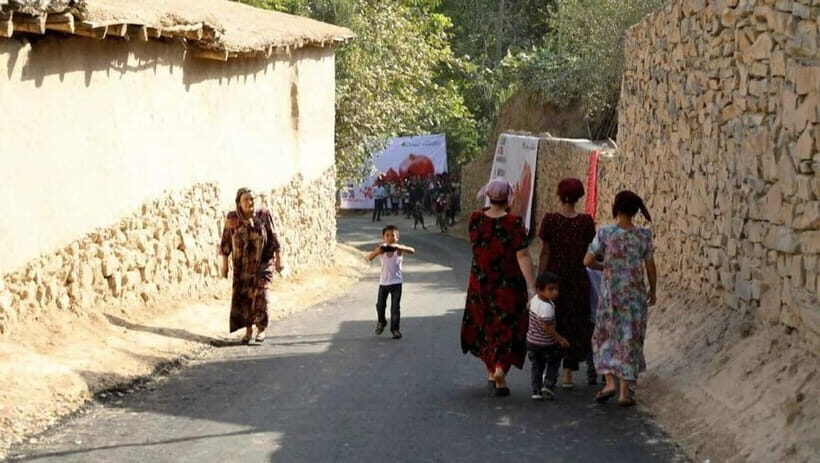
Your first major stop is the Mausoleum of Mukhammad Bashoro, in the small village of Mazari Sharif, just east of Panjakent. It’s an 11th–12th century monument, and what makes it interesting is the way later building phases shaped what you see. The information connected to the site notes a large, deep arched shrine and small rooms tucked into the corners, plus corridors added during the 14th century building work (dated to 1342–43).
In practical terms, this stop gives your day a strong “pause” point. You’re not just looking at stone foundations; you’re seeing how people designed space for devotion and movement—shrines, side rooms, and connecting corridors.
What to watch for: this is a monument in a village setting, so comfort matters. Wear shoes you’re happy to walk in, and bring layers if the weather swings during the day.
Ancient Panjakent: seeing the Sogdians in the real place they built
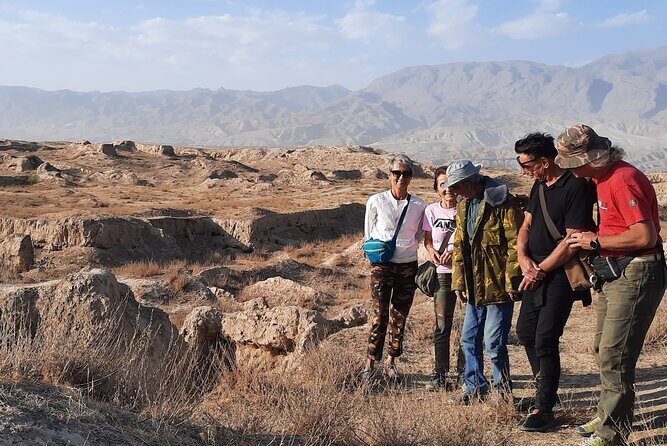
Next comes Ancient Panjakent, tied to the Sogdians. The site is associated with very early beginnings, with foundations that reach back to the 5th century BC, and then a real flourishing in the 5th century AD. This is the kind of stop where the best experience comes from slowing down for a few moments, even if your visit is about an hour.
Ancient Panjakent is also one of those locations that helps you connect “Silk Road” to actual people. The Sogdians weren’t just travelers and traders passing through; they lived here and developed an urban life. That’s what makes the ruins feel more grounded than a generic “old city.”
A practical note: ruins can look different at different times of day. If you can, aim for good light—midday can be harsh, but early or late light tends to make details easier to spot.
Panjakent Bazaar: a short hit of daily life (and why it’s worth doing)
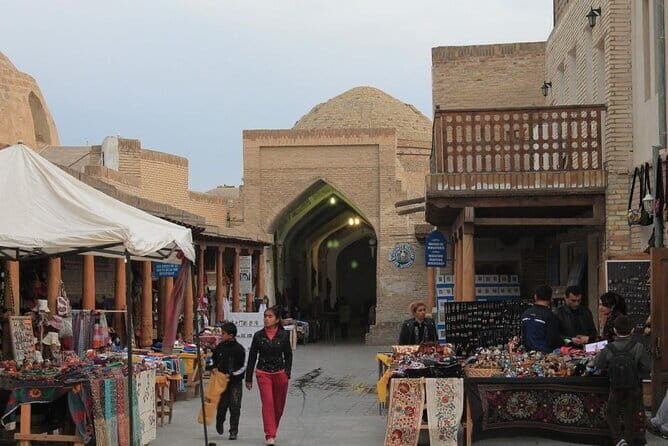
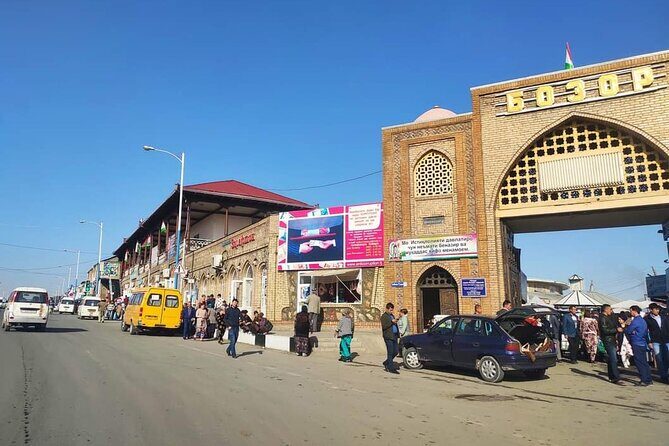
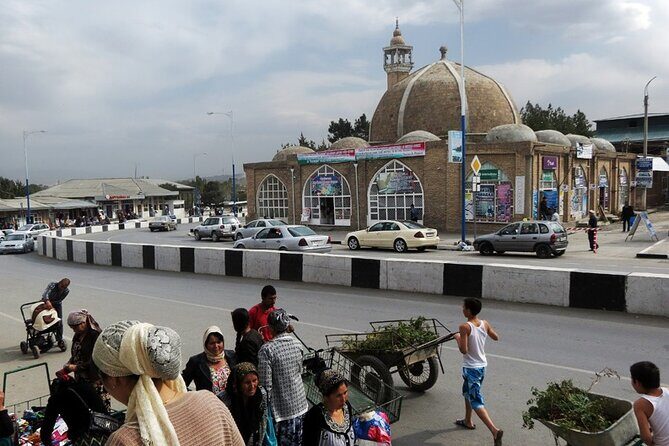
After the ruins, you get Panjakent Bazaar. This stop is short—about 30 minutes—and admission is free. The point isn’t to shop for a cartload of souvenirs. It’s to get your bearings in a living town and watch the pace of market life.
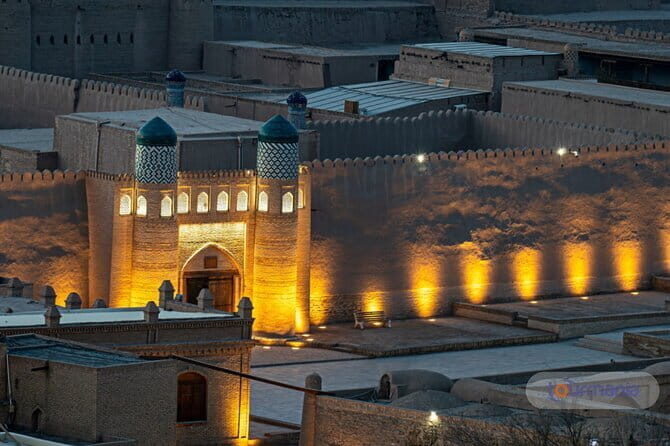
The descriptions connected to this stop paint it as a morning scene with a lot of movement—women in headscarves and floral clothing, people weaving through the area as the day’s rhythm kicks in. There’s also an ornate gate element that frames the transition from the everyday market flow into the “site” feeling nearby.
Consideration: because it’s brief, don’t plan to treat this like a full market stroll. If you love markets, you’ll probably want extra time later, but if your goal is context for the historic sites, this quick stop does its job.
Rudaki’s museum: poetry, columns, and a calm break from ruins
The Republican Museum of History and Local Lore of Rudaki is a nice change of pace. It’s a single-storey museum with white Doric columns and floral displays, and it includes a room dedicated to Abu Abdullah Rudaki (858–941), described here as the father of Persian poetry.
This stop matters because it anchors place in culture, not just architecture. If you’ve spent the morning looking at settlement patterns and building remnants, the museum gives you a human thread—language, ideas, and the kind of cultural memory that survives long after walls are gone.
What you’ll likely enjoy most: a museum like this is often easier to absorb when your brain is tired from outdoor walking. You can sit, read, and get a clearer sense of what the region means beyond the literal ruins.
Sarazm: a 3500 BC starting point you can actually see
If you want one “wow” moment that resets the timeline, Sarazm is it. This proto-urban site is described as being founded around 3500 BC, which makes it far older than the Sogdian town you saw at Ancient Panjakent.
Sarazm is also noted as the first World Heritage Site in Tajikistan and as a settlement with a history of about five and a half thousand years. The site includes well-preserved palace and religious buildings, along with public and residential spaces. In other words, you’re not only looking at scattered traces—you’re seeing a layout that suggests how early city life organized itself.
Why it works in a day trip: Sarazm’s age can feel abstract until you’re physically there. Even with about 1.5 hours to explore, it gives you a scale you can feel: this region has been meaningful for thousands of years, not just centuries.
Consideration: older sites are often exposed. You’ll want sun protection and water, and you’ll want to keep an eye on footing where surfaces can be uneven.
How the 6–7 hour format stays worth it
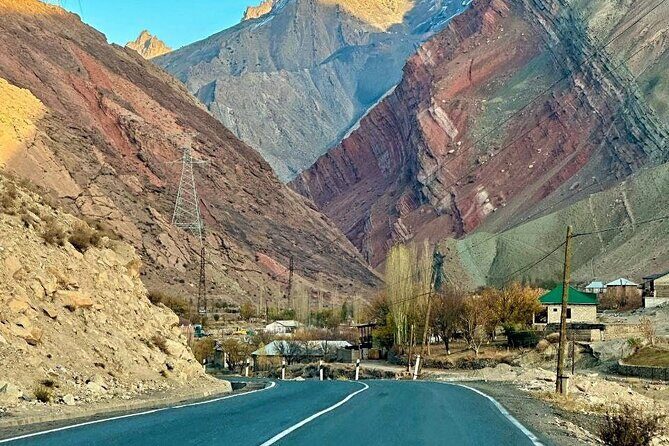
The full trip runs about 6 to 7 hours, which is just enough time to build a story without turning it into a marathon. You get a strong sequence: mausoleum (medieval), ancient ruins (Sogdians), market (living town), museum (cultural framing), and Sarazm (deep-time city life).
The transport setup also helps. You’re in an air-conditioned vehicle, and the tour includes pickup, which means you’re not stuck figuring out timing and meeting points on your own.
A small but real advantage is the tour’s ticket and access approach. You get a mobile ticket, and the stops are structured so that admissions are handled as part of the experience—most admissions are included, and the market stop is free.
Price and value: where the $150 actually goes
At $150 per person, this isn’t a budget-only outing. But the pricing makes more sense when you look at what you’re getting for the day.
You’re not just paying for transport. You’re paying for:
- Air-conditioned vehicle (comfort matters on hot or dusty days)
- Lunch included (a big time-saver and practical cost control)
- All fees and taxes included
- Admissions included for the main paid stops (and free entry for the bazaar stop)
Also, the guide layer can be the difference between seeing ruins as random shapes versus understanding what they were meant to be. In one of the experiences shared with me, the guide Umar was specifically praised for English clarity and for keeping the day running smoothly—including handling a border crossing without drama. That kind of hands-on help is hard to replicate on your own when you’re managing multiple sites in one stretch.
One trade-off: this price is for a packaged day with set stops. If you want to linger for hours at just one site, you may prefer a more flexible approach.
Who this trip suits best (and who should think twice)
This is ideal if you:
- Want more than one historic site in a single day without organizing logistics
- Enjoy understanding the region’s story—from Sogdians to pre-urban roots
- Appreciate the mix of outdoors (Ancient Panjakent, Sarazm) and indoors (Rudaki museum)
- Prefer pickup + lunch so you don’t burn time on meals and meeting points
It’s less ideal if you:
- Only want the biggest, most monumental sites with long viewing time
- Hate short stops (because Panjakent Bazaar is brief by design, and the museum is around an hour)
- Are sensitive to weather changes, since the experience requires good weather and may be moved or refunded if canceled for poor conditions
Quick tips to get the best day out of it
- Wear comfortable shoes with grip. Ruins and older grounds can be uneven.
- Bring sun protection. Sarazm and Ancient Panjakent are outdoors and time can pass quickly.
- Plan for a packed day. You’ll be moving from site to site, so keep your bag light.
- Lunch is included, but alcoholic beverages are not. If you want a drink, you’ll need to sort that separately.
Should you book the Panjakent day trip from Samarkand?
I’d book it if you want a thoughtful change of scenery from Samarkand with real historical depth—especially if Sarazm and the Sogdian story appeal to you. The value sits in the structure: transport, lunch, and site access bundled into a day that stays under 7 hours.
I’d think twice if you’re expecting a Samarkand-level parade of grand monuments and long stays. Panjakent is smaller, and the payoff is in context and connections—seeing how people lived across centuries rather than checking off the biggest landmark in town.
If you like short, meaningful site stops and you’re curious about the wider Silk Road picture, this is a strong way to spend a day.
FAQ
How long is the Panjakent day trip from Samarkand?
It runs about 6 to 7 hours.
What does the $150 per person price include?
The price includes an air-conditioned vehicle, lunch, and all fees and taxes.
Are admission tickets included?
Yes. Admission tickets are included for the Mausoleum of Mukhammad Bashoro, Ancient Town of Panjakent, the Rudaki museum, and Sarazm. The Panjakent Bazaar stop has free admission.
Do they pick you up in Samarkand?
Yes, pickup is offered.
Is it a private tour or a shared group?
It’s a private tour/activity, meaning only your group participates.
Do I get a mobile ticket?
Yes, the tour includes a mobile ticket.
Is alcohol included with lunch?
No, alcoholic beverages are not included.
What happens if the weather is bad?
The experience requires good weather. If it’s canceled due to poor weather, you’ll be offered a different date or a full refund.
Can I cancel for a full refund?
Yes. You can cancel up to 24 hours in advance for a full refund.
When do I receive confirmation?
Confirmation will be received at the time of booking.