REVIEW · KHIVA
Daytrip from Khiva to Five Ancient Fortresses
Book on GetYourGuide →Operated by Amu Transport · Bookable on GetYourGuide
Ancient walls, and a long day out. This five-fortress circuit is interesting because you’re not stuck in one big monument—you hop between separate sites like Guldursun-Kala and Kyzyl-Kala and you can actually feel how spread out Khorezm was. I also like that it runs as a private group with round-trip A/C transport, so you’re not sharing time with strangers. The main drawback is simple: a guide isn’t included, so how much you understand on-site depends on your driver’s English.
You’ll be in Karakalpakstan for most of the day, heading out from Khiva (or Urgench) to places that are famous to historians but still feel wild and quiet for visitors. I like that the pace gives you breaks and photo time, and there’s even a safety briefing near the last stop. Just know that some fortresses are more “archaeological remains” than “big, obvious sights,” so your experience can vary by what you personally enjoy.
In This Review
- Key highlights worth your attention
- Khiva to Karakalpakstan in 7 hours: what the day is really like
- Guldursun-Kala: rectangular fortifications and loopholes
- Ayaz-Kala: the showy stop that’s actually a fortress complex
- Kavat-Kala: a 15 km stretch with evidence of serious medieval life
- Toprak-Kala: governor residences, war-driven abandonment, and finds from excavations
- Kyzyl-Kala: refuge fort with smoke signals, double walls, and water pipes
- Breaks, photo stops, and timing: how the itinerary affects your comfort
- Price and tickets: what $115 gets you, and what it doesn’t
- Your driver is the “guide”—so plan for English limits
- Who should book this fortresses daytrip?
- Should you book this day trip from Khiva to the five ancient fortresses?
- FAQ
- What’s the duration of the day trip from Khiva to the five ancient fortresses?
- How much does it cost, and how many people can be in a group?
- Where are the pickup and drop-off locations?
- Are entry tickets included in the price?
- Is a guide included during the tour?
- What fortresses are included on the day trip?
- Can I cancel for a refund?
Key highlights worth your attention
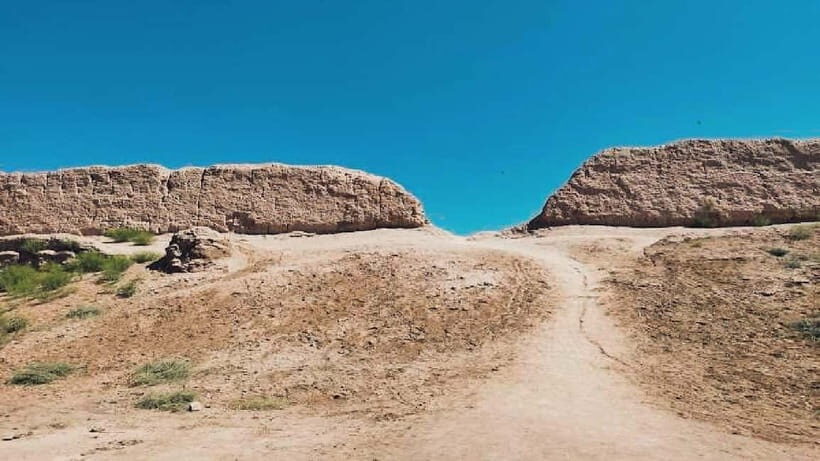
- Five named fortresses in one day: Guldursun-Kala, Ayaz-Kala, Kavat-Kala, Toprak-Kala, and Kyzyl-Kala
- Meaningful details at each site: loopholes, a hill complex, a 15 km stretch, and water systems
- Private, A/C vehicle with pickup from Khiva or Urgench
- No formal guide included, so you’ll rely on your driver’s commentary
- Entrance tickets are extra, so budget for site fees
Khiva to Karakalpakstan in 7 hours: what the day is really like
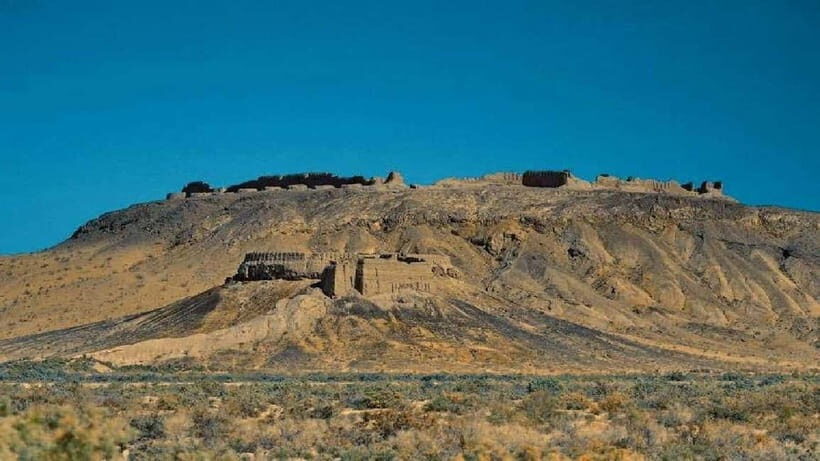
This is a long, “get out and go” day—about 7 hours total—built around the idea that the best way to understand Khorezm’s ancient power is by seeing how scattered these defensive sites are. You’re picked up from your hotel in Khiva or Urgench (and you can also be picked up at Urgench airport), then transferred by round-trip A/C vehicle with parking fees included.
The trip is private, up to 3 people per group, which is a big quality-of-life perk when you’re crossing rural areas and want the flexibility to stop for photos without holding up a bigger group. If you’re the type who likes structure, though, remember this: there’s no dedicated guide included, and your driver may focus more on driving than explaining.
You can also read our reviews of more tours and experiences in Khiva.
Guldursun-Kala: rectangular fortifications and loopholes
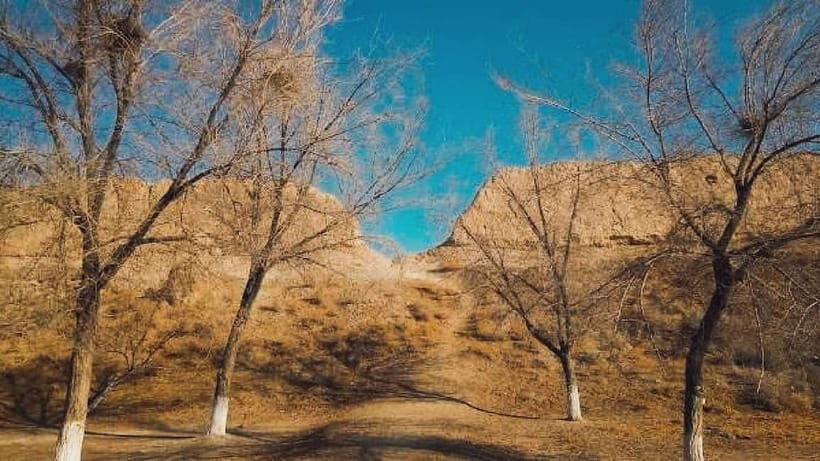
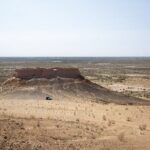
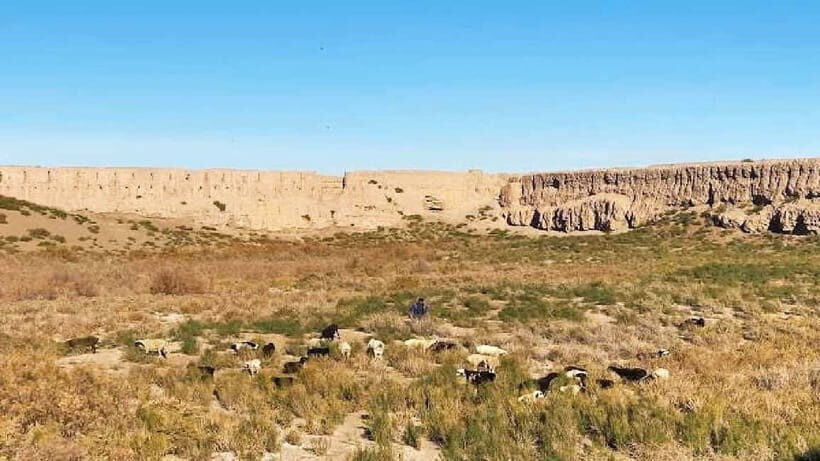
Guldursun-Kala is dated to the 2nd–1st centuries BC, and it’s the kind of site that rewards slow walking. The fortification has a rectangular plan over roughly 35 hectares, and the adobe walls are lined with built-in loopholes—practical military design, not decorative walls.
What I find compelling here is the timeline. Evidence suggests the fortress was occupied until around 1220, matching the era of the Mongol invasions of the Khwarezmian Empire, then later fell into ruin for unknown reasons after earlier periods. When you stand near remains like this, it’s easier to imagine the constant rebuilding and abandonment that defined the region.
Practical tip: take a moment to scan the wall lines first, even if you can’t see everything clearly. The “shape” of the fortress helps you understand what the builders were trying to control.
Ayaz-Kala: the showy stop that’s actually a fortress complex
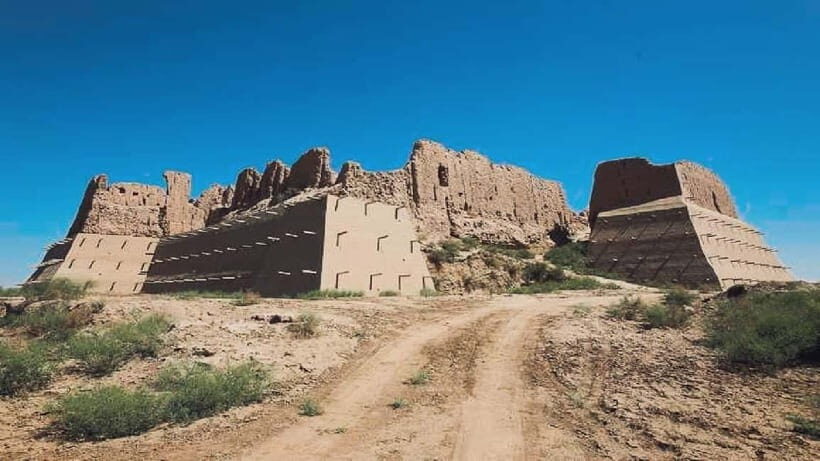
Ayaz-kala is often described as the most “showy” of the group, and there’s a reason. The name comes from a Turkic word meaning frosty/cold, and the setting is striking enough that it tends to be a favorite photo moment.
Here’s the key detail: it isn’t just one fortress. It’s a complex of three fortresses grouped around a hill in the eastern part of the Sultan Uizdak ridge. That means you might feel like you’re walking in circles a bit, especially if you’re expecting one clear, single viewpoint.
Why this matters for your expectations: a complex site can look confusing at first, but it also shows you a broader settlement pattern—people weren’t defending just one building, they were organizing a hillside stronghold.
Kavat-Kala: a 15 km stretch with evidence of serious medieval life
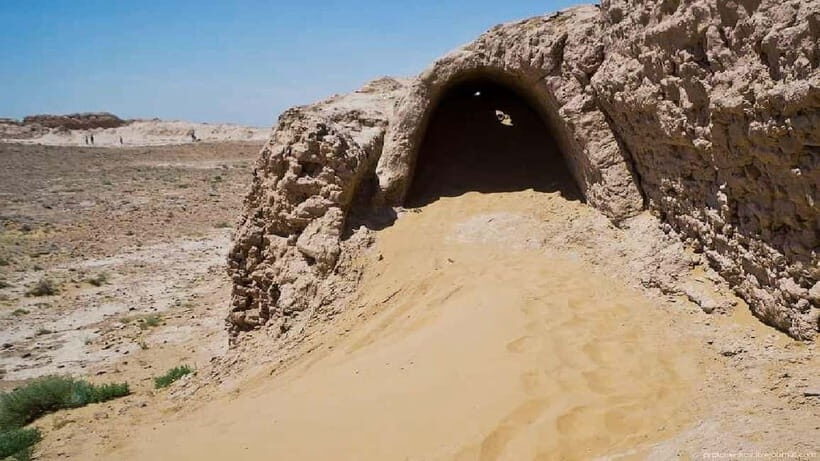
Kavat-Kala is one of the most impressive “scale” stops on the day. The monument stretches for about 15 km, with a width around 2–3 km along the Gavhore Channel. Even from a distance, that size changes how you read the ruins—you stop treating them like one attraction and start treating them like an inhabited zone.
Historically, the site was heavily populated from the 12th to 13th centuries, when the central area may have had up to 90 estates. Until recently, ruins of residential buildings and clay structures were still visible, and that’s part of why Kavat-Kala feels different: it’s not only defensive architecture, it’s also evidence of daily routines.
A realistic note: because it’s large, you may not see every part of it in a limited stop window. I’d focus on walking just enough to understand the general footprint and then use photo time to capture the best angles.
Toprak-Kala: governor residences, war-driven abandonment, and finds from excavations
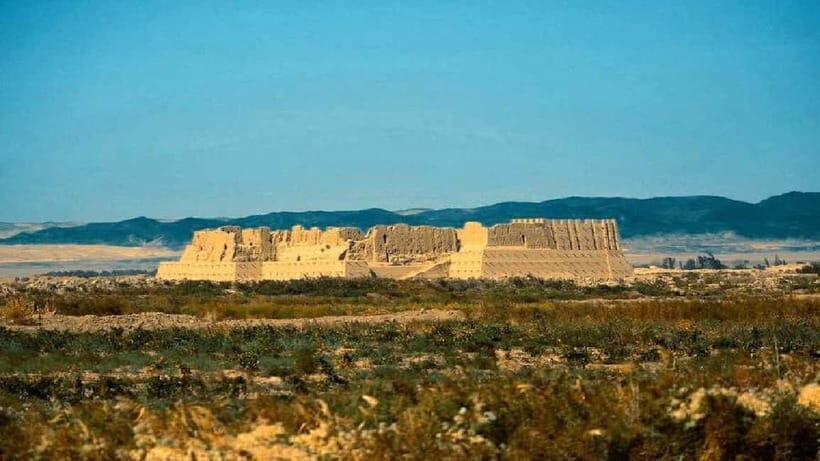
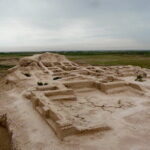
Toprak-Kala was built in the 3rd century and served as a residence for khorezmshakhs—the governors. The site was used up to around 305 A.D., and then aggressive wars forced the governors to leave, which is why the city gradually fell into decay.
This is also a stop where the story goes beyond walls. Excavations have uncovered artifacts like thin ceramics, wool and silk fabrics, gold ornaments, and a necklace of about 300 glass beads. There are even references to Zoroastrian’s canopic jars and other small finds like amber and corals.
If you’re used to big museum displays, you might mentally expect the same here. But Toprak-Kala’s value is in perspective: it’s proof that governors lived with luxury materials and complex craftsmanship, even in a hard, conflict-driven borderland.
Kyzyl-Kala: refuge fort with smoke signals, double walls, and water pipes
Kyzyl-Kala is the “end of the defensive line” feeling stop. It served as a refuge for local inhabitants during nomadic raids. Smoke signals were used to alert people to approaching armies, giving time to prepare and retreat inside the citadel.
The fortification is described as being surrounded by a double wall, with watchtowers fortified at the corners. There are also details that make it feel unusually practical: ceramic pipes were installed to funnel a continual water supply to the fort.
On a day like this, I like finishing with a site that explains not just what the fort looked like, but how it worked under pressure. Also, expect a short safety briefing at this stop—use it, and keep a mindful pace around uneven ground.
Breaks, photo stops, and timing: how the itinerary affects your comfort
The stops are spread across the day with scheduled breaks around Kavat-Kala and Toprak-Kala, plus additional photo and walk time at the fortresses. That matters because remote archaeology days aren’t only about seeing. They’re about managing fatigue—heat, dust, uneven paths, and that mental switch from museum logic to ruin logic.
Here’s how I’d plan your mindset: treat each fortress as a short chapter. Guldursun-Kala helps you understand early defensive design. Ayaz-Kala introduces the idea of a complex hill system. Kavat-Kala brings medieval settlement scale. Toprak-Kala gives you the governor-life contrast. Kyzyl-Kala closes with the refuge-and-survival model.
Price and tickets: what $115 gets you, and what it doesn’t
This costs $115 per group (up to 3 people). For that price, you get round-trip A/C vehicle, private transportation, pickup from Khiva or Urgench, drop-off back in both areas, and parking fees. You also get a flexible departure time and skip-the-line via a separate entrance (site access is smoother even if you still have to pay for the entrance ticket itself).
What’s not included: entry tickets, an on-site guide, and optional lunch. So your total day budget depends on how many sites you decide to enter fully and what you do for food.
One guest-style budgeting note you’ll want to keep in mind: entrance fees can be a surprise if you didn’t plan for them. If you want a simple approach, I’d carry cash for tickets and be ready for the possibility that fees are collected at multiple stops.
Your driver is the “guide”—so plan for English limits
Because a formal guide isn’t included, your driver becomes the main translator between you and the ruins. The information you hear may be basic, especially if English proficiency is limited, but the driver should still be fully trained and able to run the schedule smoothly.
The quality variable is real: some drivers make the day feel personal with humor, quick back-and-forth, and added stops. Others mainly focus on transportation and give only minimal commentary. Either way, you’ll still get the core experience—those five fortresses in one pass.
My practical advice: before you set out, ask one simple question you can remember for each site, like what time period you’re looking at next. Even a short answer helps you place what you’re seeing. And if your driver offers to stop somewhere for photos or a quick snack along the route, take it—those small moments often become the highlight of a long ride.
Who should book this fortresses daytrip?
I’d book this if you:
- Like archaeology and ruins that require a bit of imagination
- Want a private, efficient day outside Khiva without hiring a full guide for every stop
- Enjoy comparing different defensive styles and settlement patterns
You might skip it if you only want “fully intact monuments” where everything is obvious on sight, because some fortresses can be subtle and harder to interpret quickly—especially without an on-site guide.
This is a strong fit for couples or small groups who are comfortable reading ruins and want logistics handled.
Should you book this day trip from Khiva to the five ancient fortresses?
Book it if you want a day that’s mostly open-air exploration in Karakalpakstan, with private A/C transport and a route that hits five named sites: Guldursun-Kala, Ayaz-Kala, Kavat-Kala, Toprak-Kala, and Kyzyl-Kala. The value is the convenience—getting there and between sites is the hard part—and the fortresses themselves give you enough variety to keep the day from feeling repetitive.
I’d only hesitate if you need deep, fluent explanations on every stop. In that case, consider upgrading to a guided option or be ready to rely on what you can read on-site plus what your driver can share.
FAQ
What’s the duration of the day trip from Khiva to the five ancient fortresses?
The trip lasts about 7 hours.
How much does it cost, and how many people can be in a group?
It costs $115 per group up to 3 people.
Where are the pickup and drop-off locations?
Pickup is available from hotels in Khiva or Urgench (and Urgench airport/Train station). Drop-off is back in Khiva and Urgench.
Are entry tickets included in the price?
No. Entry tickets are not included.
Is a guide included during the tour?
No. A guide is not included.
What fortresses are included on the day trip?
The day trip includes Guldursun-Kala, Ayaz-Kala, Kavat-Kala, Toprak-Kala, and Kyzyl-Kala.
Can I cancel for a refund?
Yes. You can cancel up to 24 hours in advance for a full refund.