REVIEW · BUKHARA
Bukhara One Day Tour – Departure From Tashkent
Book on GetYourGuide →Operated by GOTOUZBEKISTAN · Bookable on GetYourGuide
Bukhara in a single day feels intense, in a good way. I like the combo of train and flight that keeps this trip possible, and I also like how you get guided time at the Poi Kalon Ensemble and the Trading Domes. The trade-off is you’ll live on a tight schedule and, in a few cases, guide English and timing can be uneven—so plan to be flexible.
You’ll leave Tashkent early, reach Bukhara in the morning, and spend the middle of the day focused on the city’s biggest landmarks—mosques, mausoleums, and madrasas—plus shopping stops. I also appreciate that lunch and entrance fees are included, which removes a lot of budgeting stress on an expensive day.
If you’re the type who wants lots of slow wandering and photos at every corner with zero pressure, this may feel like a sprint. If you want the big Bukhara hits, with help making sense of it all, it’s a strong fit.
In This Review
- Key points to know before you go
- One-day route: early pickup, 4-hour train, 80-minute flight
- First stop in Bukhara: Poi Kalon and the scale of Islamic architecture
- Trading Domes and bazaars: shopping time that actually matters
- Madrasas, mausoleums, and mosques: what your guide helps you catch
- The value of the package price: what $299 is buying you
- Timing reality check: long day, lots of walking, tight coordination
- Guide language and pacing: how to get the best day
- When the train plan changes: what happens if high-speed is unavailable
- Practical stuff that makes the difference (and saves stress)
- Should you book this one-day Bukhara trip from Tashkent?
- FAQ
- How long is the Bukhara one-day tour from Tashkent?
- What is the travel time from Tashkent to Bukhara?
- How do you return to Tashkent?
- Are entrance fees and lunch included?
- Does the tour include a guide?
- Is pickup from hotels in Tashkent included?
- What if the high-speed train is not available?
- What is the cancellation policy?
Key points to know before you go
- Train to Bukhara, flight back to Tashkent: You get a true one-day loop instead of losing days to travel.
- Poi Kalon Ensemble time is built in: This is one of the main architectural stops on the route.
- Trading Domes shopping isn’t an afterthought: You’ll have dedicated time for bazaars and browsing.
- Guide quality can vary: English can be strong with some guides (like Shahnoza, Julia, Dilfuza), less so with others.
- Expect a long, walking-heavy day: Even with breaks and lunch, your feet will do the work.
- $299 includes more than sightseeing: Lunch, entrance fees, guide, and transportation are part of the package.
One-day route: early pickup, 4-hour train, 80-minute flight
This tour is designed for a practical goal: get you from Tashkent to Bukhara and back without spending the night. In plain terms, you’re signing up for a long travel day where the “1 day” label is real, but the clock runs hard.
You start with hotel pickup in Tashkent, then take the train toward Bukhara (about 4 hours). Once you arrive, you get around 6 hours in Bukhara for guided touring, shopping, and sightseeing. After that, you fly back (about 80 minutes) and return to Tashkent later the same day.
Here’s the part you should take seriously: departures can be very early. Some schedules run around a 5am pickup to catch a 6:20am flight, while other days look closer to an 8am departure. Either way, you’ll want to be ready the night before—charge devices, keep documents accessible, and don’t rely on a late breakfast.
You can also read our reviews of more tours and experiences in Bukhara.

First stop in Bukhara: Poi Kalon and the scale of Islamic architecture
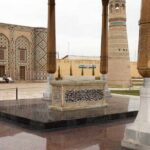
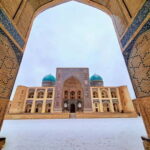
If you only remember one “center of gravity” from your day, make it the Poi Kalon Ensemble. This is the kind of place where the buildings aren’t just pretty—they’re a statement of power, learning, and engineering, all at once.
With a guide, you’ll connect the visual dots: why the domes and towers are positioned where they are, how the complex functions as a hub of religious and educational life, and what the architecture meant when Bukhara was at the top of the Silk Road food chain. You’ll also learn enough background to avoid the classic problem of seeing impressive shapes but missing the point.
A practical note: this stop is popular and photo-heavy. So I’d treat it like a must-see block—move with purpose, but don’t rush through details your guide points out. The payoff is when you return later and can name what you’re looking at.
Trading Domes and bazaars: shopping time that actually matters
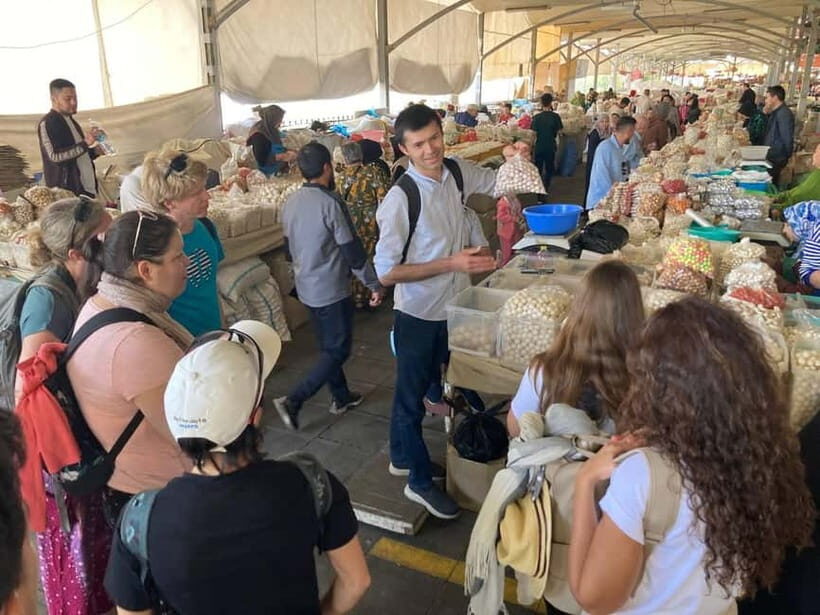
Bukhara’s trading areas are where the city feels least like a museum and most like a working place. This tour includes time at the Bukhara Trading Domes, and you’ll also get browsing opportunities in the bazaars.
This isn’t just about buying souvenirs. It’s about learning how to move through a historic commercial space without feeling lost. Your guide will also help with “where to go” choices—useful when your energy is being spent on walking between big monuments.
If you care about crafts, textiles, ceramics, or local food stops, this portion is where you’ll notice a difference between a rushed visit and one with real time. You’re also more likely to shop smart when you can ask questions and compare items without feeling hunted by the clock.
Madrasas, mausoleums, and mosques: what your guide helps you catch
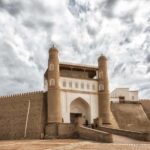
Bukhara is a city where religious buildings, schools, and tombs are deeply interwoven. On this tour, you’ll spend your guided sightseeing time moving through ancient mosques, mausoleums, and madrasas—the core pieces that explain why the city mattered to Islamic art and culture.
The value here isn’t just “see a building.” It’s understanding how the city’s artistic language shows up everywhere: patterns, proportions, inscriptions, and the way buildings were designed to communicate meaning. When you’re moving fast, that context keeps the day from turning into a checklist.
Also, guides can really shape what you get. Some guides have an approach that turns the architecture into stories you can repeat later. Names that come up include Shahnoza, Julia, Dilfuza, and mother-and-daughter pairs like Gulirano (with family support). If you get a guide who asks what you like—art, design, daily life, or history—you’ll usually get a better match to your interests.
The value of the package price: what $299 is buying you
Let’s talk money in a way that helps you decide. At $299 per person, this isn’t a budget day trip. You’re paying for logistics and guided time.
Here’s what’s included:
- Hotel pickup and drop-off in Tashkent
- High-speed train tickets (with a contingency plan if the train isn’t available)
- Entrance fees
- Lunch
- Guide (English or Russian)
- Transportation
What’s not included:
- Travel insurance
- Personal expenses
So the value question becomes: do you want Bukhara’s biggest sights with guide interpretation, plus the train/flight coordination, all in one day? If yes, the included items reduce friction. If you’d rather DIY and take a slower pace, you might be able to spend less on transportation and guide time—but you’ll likely lose the efficiency that makes this one-day plan work.
In short: $299 is paying for structure. If you like structure, it’s a fair bet. If you hate structure, look for a longer stay format.
Timing reality check: long day, lots of walking, tight coordination
This tour can run long. Even though the plan calls for specific blocks (train, Bukhara touring, flight), the lived experience depends on departure times, airport or station flow, and how your guide manages the route.
One thing I’d take from the practical feedback: wear comfortable shoes. The walking adds up quickly when you’re moving between monuments and then back into the shopping areas. Bring water, and consider packing small snacks. There’s lunch included, but a long day is still a long day.
Another timing factor: your guide and driver need to keep the train and flight transitions clean. Some schedules mention that guides assist with boarding the right transport, and that helps. Still, I’d keep your own safety net: know your departure time, have your e-tickets accessible, and take note of where you’re supposed to go before you’re tired.
Guide language and pacing: how to get the best day
The biggest variable in this experience is the human factor: guide communication and time management. The info says the live guide is available in English or Russian, but actual English comfort can differ from guide to guide.
So here’s my practical advice if you’re planning in English:
- If you’re picky about understanding details, confirm your guide language preference clearly before departure.
- If you care about specific themes (art, architecture, daily life), tell your guide early. Some guides take a personal approach and adjust the route based on your interests.
- If you start to feel the day is spending too long in low-priority places, ask for a gentle adjustment. A good guide will re-balance the route without making it awkward.
Names that show up with strong results include Shahnoza and Dilfuza, and there’s an example of guides being praised for managing time well so you hit major sites. But there are also reports of uneven English and a tour that didn’t fully match the expected focus. That’s why I suggest you take your preferences seriously from the start.
When the train plan changes: what happens if high-speed is unavailable
You’re relying on rail to make the schedule work. The good news is the operator says that on rare occasions when the high-speed train isn’t available, they’ll replace it with the most-comfortable class of a regular train.
That substitution matters because regular trains can mean changes in comfort, timing, and overall rhythm of the day. You won’t lose the trip idea, but your comfort level might shift—especially if you’re sensitive to schedule changes.
The best move: keep your expectations flexible and plan for a travel day that can shift slightly while still delivering Bukhara sightseeing.
Practical stuff that makes the difference (and saves stress)
This is one of those tours where small preparation beats big worry. You’re doing early pickup, long sitting on transport, and then lots of walking.
What I recommend:
- Keep a small day bag with water, snacks, and sunscreen.
- Wear shoes you can walk in for hours, not just a monument stop.
- Bring extra patience for “big day” logistics like queues and boarding.
- Have your e-tickets ready on your phone or as a backup screenshot, so you don’t scramble at the station or airport.
Also, because this is a private group format, your experience can be more tailored when there’s only you (one booking example described being the only guest). If that happens, you can often get more attention—but you’ll still need to keep moving, since the schedule is still the schedule.
Should you book this one-day Bukhara trip from Tashkent?
I’d book it if you meet two conditions: you want the top highlights of Bukhara (especially Poi Kalon and Trading Domes) and you’re okay with a long, walking-heavy day with an early start. You’re also likely to enjoy it if you like the help of a guide to connect architecture and meaning fast.
I’d think twice if any of the following are true: you need very slow pacing, you don’t handle schedule pressure well, or you’re worried about language quality. In a few cases, people reported problems like pickup confusion or day-of cancellation for other tours using the same operator. That doesn’t mean your day will go wrong, but it does mean you should confirm details and stay alert the morning of.
If you want a single, efficient Bukhara day and you’re willing to move with the flow, this tour is a solid way to get there without sacrificing your whole trip to transit.
FAQ
How long is the Bukhara one-day tour from Tashkent?
The duration is 1 day.
What is the travel time from Tashkent to Bukhara?
The tour includes a train ride of about 4 hours to reach Bukhara in the morning.
How do you return to Tashkent?
You fly back to Tashkent, with the flight time listed as about 80 minutes.
Are entrance fees and lunch included?
Yes. Entrance fees and lunch are included in the tour price.
Does the tour include a guide?
Yes. A live tour guide is included, and the guide language is English or Russian.
Is pickup from hotels in Tashkent included?
Yes. Hotel pickup and drop-off in Tashkent are included.
What if the high-speed train is not available?
On rare occasions when the high-speed train is unavailable, it will be replaced with the most-comfortable class of regular train.
What is the cancellation policy?
Free cancellation is available up to 24 hours in advance for a full refund.