REVIEW · BUKHARA
2 Days Private Safari Tour from Bukhara
Book on Viator →Operated by Silk Road Tours · Bookable on Viator
Rock carvings. Real quiet. This 2-day private safari strings together Stone Age petroglyphs in Sarmishsay Gorge and an overnight desert yurt camp near Lake Aydarkul, then finishes with a relaxed day of village life and a picnic by the water. I like that the route feels purposeful, not rushed, and I also like that your evening includes real camp atmosphere: stories at the fire and traditional music.
The one thing to keep in mind is transport comfort. The itinerary is built around long drives, and in at least one case the AC didn’t work at first due to fuel trouble—luck of the day can affect how pleasant the ride feels.
In This Review
- Key highlights you’ll care about
- Two Days, Bukhara to Samarkand: What This Safari Really Delivers
- Entering Sarmishsay Gorge: Stone Age Petroglyphs in a Real Setting
- Nurata City and Alexander’s Monuments: A Stop That Connects Stories
- Day 1 in the Yurt Camp: Music, Camel Time, and Fire Stories
- A quick reality check on comfort
- Day 2: Village Life at Dungalak and a Picnic on Aydarkul Lake
- What You Actually Get for the Money: Value Breakdown
- Transportation and Timing: The Real-World Logistics That Matter
- Meals, Music, and Night Atmosphere: Why People Remember This
- Who This Tour Fits Best (and Who Might Want Something Else)
- Should You Book This Bukhara-to-Samarkand Yurt Safari?
- FAQ
- FAQ
- Where does the tour start and where does it end?
- What time is hotel pickup in Bukhara?
- How long is the drive to the yurt camp on Day 1?
- What is the main petroglyph stop called?
- What do you do at the yurt camp?
- Are meals included?
- What happens on Day 2 besides the lake?
- Can you swim in Lake Aydarkul?
- Is transportation air-conditioned?
- Can I cancel for a full refund?
Key highlights you’ll care about
- Sarmishsay Gorge petroglyphs: two rock-art areas with a total of about 10,000 ancient carvings
- Nurata stop tied to Alexander the Great: you’ll see monuments linked to his era
- Aydarkul Lake time: picnic plus time to stroll or swim depending on the season
- Village visit at Dungalak: see how families live with livestock
- Yurt camp night program: traditional music around the fire and a short camel ride (about 20 minutes)
- Private means your pacing: pickup and only your group on the route
Two Days, Bukhara to Samarkand: What This Safari Really Delivers
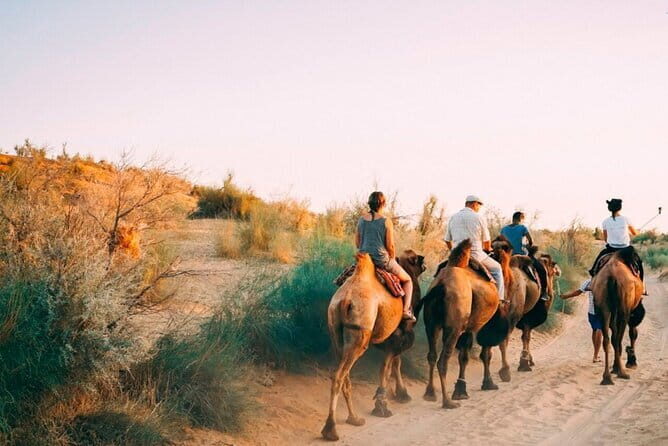
This isn’t a sit-and-stare tour. It’s a “move through places with meaning” kind of trip. You start in Bukhara and end in Samarkand, with an overnight yurt camp right near Lake Aydarkul. If you like your travel with a dose of local detail—rock art, village rhythms, and desert-night atmosphere—this is a strong fit for a short window.
I also like the shape of the itinerary. Day 1 concentrates on the big-ticket wow factor: Sarmishsay Gorge and then the Alexander-linked monuments in Nurata, before you reach camp. Day 2 shifts to how real people live, then gives you a break by the lake.
One more practical point: it’s private. That matters because desert tours can be awkward when you’re sharing space with people who don’t match your pace. Here, you’re not negotiating group energy. You’re just along with your driver and guide.
You can also read our reviews of more private tours in Bukhara
Entering Sarmishsay Gorge: Stone Age Petroglyphs in a Real Setting
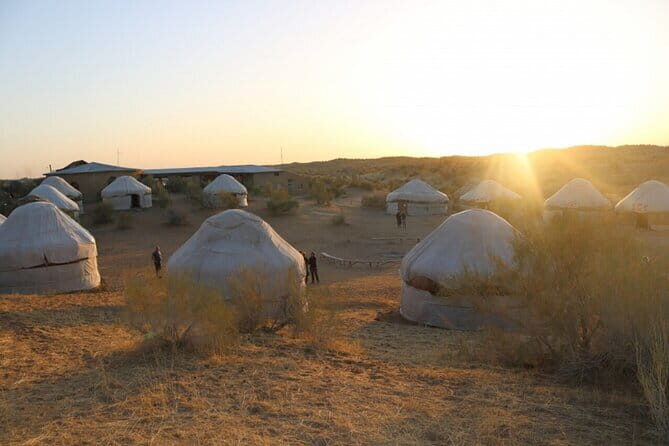
The first stop is Sarmishsay Gorge, famous for some of the oldest rock carvings in the region. The tour takes you through a place with archaeological remains stretching back to the Stone Age, including two petroglyph sites with a total of around 10,000 ancient rock carvings.
Here’s why that’s worth your time: petroglyph sites feel different from museum displays. In person, you get the “scale” of the carvings—the sense that people marked these rocks across generations. It can also make your brain work in a good way: not just looking at images, but trying to imagine what life looked like before there were maps, roads, or even written records.
What to expect on the ground is fairly simple. You’ll stop, see the petroglyph areas, and get guidance on what you’re looking at. Wear comfortable shoes. Rock-art areas often mean uneven ground and short walks to view points.
You’ll also have Chashma on the route. The details aren’t spelled out in your itinerary description, so treat it like a planned stop during the day rather than the main “event.”
Nurata City and Alexander’s Monuments: A Stop That Connects Stories
After the gorge, the tour continues toward Nurata, with a transfer that’s about 5 hours of driving total on Day 1. Nurata is a smart break point on this route because it’s more than a “pass-through” stop. You’ll explore the city’s monuments, described as being founded by Alexander the Great.
This is the kind of stop that helps the whole trip make sense. Without it, the route can feel like “desert now, desert later.” With it, you get a thread: ancient power and human settlement patterns before you switch gears into yurt camp life.
In practical terms, you’ll have time to see monuments before you head out to the countryside and eventually into camp. If you enjoy context—how places connect across centuries—this is where the tour earns extra points.
Day 1 in the Yurt Camp: Music, Camel Time, and Fire Stories
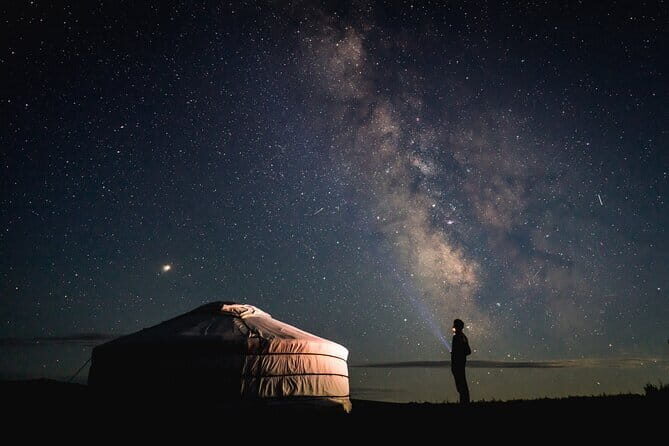
Once you arrive near Lake Aydarkul, the yurt camp is where the trip becomes memorable in a very human way. You’ll get the camp experience with a mix of simple activities and that classic desert-evening rhythm.
Here’s what’s included on your first night:
- Traditional music performance by a local bard around the fire
- Folk stories and conversation by the fire
- Camel riding around the yurt camp for about 20 minutes
- Overnight stay in the yurt camp
I like this format because it doesn’t pretend you’re doing a luxury retreat. It’s more about atmosphere: being outside, hearing music the way it’s meant to be heard, and feeling the change from busy city travel.
A tip: the camel ride is short by design (about 20 minutes). Don’t wait for it to be the main event. The fire program is the bigger “why this was worth it” part of the night.
A quick reality check on comfort
Yurt camping is a special experience, but it’s still camping. Expect rustic conditions rather than hotel-level predictability. If you’re the kind of traveler who sleeps best when everything is climate-controlled, plan to be flexible.
Also, keep in mind the transport note from real-world experience: an AC hiccup can happen when fuel stops are imperfect. If you’re sensitive to heat in the car, pack accordingly (light layers, a hat, and water).
A few more Bukhara tours and experiences worth a look
Day 2: Village Life at Dungalak and a Picnic on Aydarkul Lake
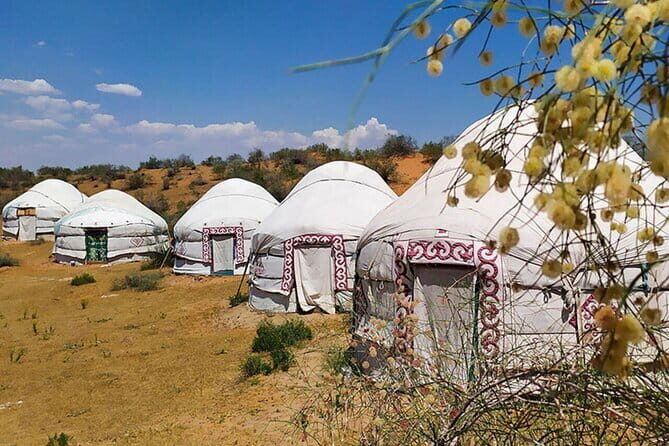
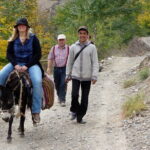
Day 2 starts with breakfast at the yurt. After that, you visit the nearby village of Dungalak. The goal here is simple: you’ll get familiar with how village people live, especially with an emphasis on livestock.
This is the best type of village visit—small, focused, and not trying to turn local life into a theme park. You’re not being asked to perform. You’re being shown daily reality. If you care about authentic routine rather than staged stops, this part is a highlight.
Then you head to Aydarkul Lake. Your schedule includes:
- visiting the lake area
- a picnic
- depending on the season, swimming or just strolling along the shore
- watching birds
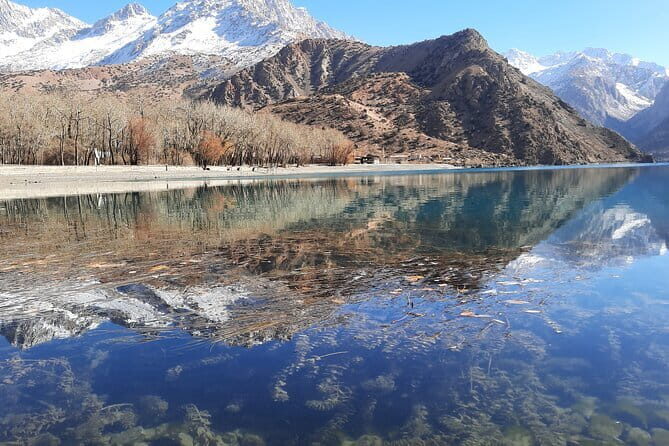
Lake time is where the pace softens. After rock art and desert drive time, it feels like someone turned down the volume. Even if you don’t swim, strolling by the water gives you a different kind of scenery than you’d get in a city.
Practical advice: bring a hat and sunglasses if you’re going in bright months. Picnic time means you’ll want sunscreen-ready comfort.
Finally, in the afternoon you drive about 5 hours to Samarkand, ending the trip.
What You Actually Get for the Money: Value Breakdown
The price is $170 per person, and the tour is often booked well ahead (on average about 88 days in advance). For many travelers, the value comes from what’s bundled, not from what you add on.
Included highlights:
- English-speaking guide (if you select that option)
- Transport in comfortable vehicles with A/C (per the program)
- Entrance fees to sights
- Overnight stay in the yurt camp (1 night)
- Meals: 1 breakfast, 2 lunches, 1 dinner
- Camel ride (about 20 minutes)
- Traditional music performance around the fire
If you were to price these items separately—overnight lodging in a remote area, meals, guide time, entrance fees, and transport—this package starts to look like a decent deal. Private tours often cost more because you’re not splitting logistics costs across a group, so bundling helps.
The main “cost” to factor in is time and comfort trade-offs. The driving is significant, and the camping side can be less predictable than a standard hotel. But if you’re excited by what’s included (petroglyphs, yurt night, lake picnic), the package feels coherent.
Transportation and Timing: The Real-World Logistics That Matter

Pickup is at 9:00 from your hotel in Bukhara (for the Bukhara-start version). From there, the Day 1 driving time to reach camp is described as about 5 hours, plus time for stops. Day 2 includes breakfast, a village visit, lake time, then a 5-hour transfer to Samarkand.
So you’re not doing “see everything, all day, every day.” You’re moving at the rhythm of a road trip with set viewing windows.
One key consideration: road time can be long, especially for people who hate sitting. If you’re prone to car sickness, pack what works for you. And remember the A/C note: the program states A/C is used, but you should be mentally prepared for imperfect conditions in remote travel.
Meals, Music, and Night Atmosphere: Why People Remember This
This trip’s memory isn’t just the petroglyphs. It’s the evening programming at the camp.
The included dinner and the camp music program create a “container” for the night. You’re not wondering what to do after you arrive. You’ll have a traditional music performance around the fire and storytelling energy that fits the place. That kind of planned cultural moment often becomes the top photo from the whole trip—not because it’s flashy, but because it feels different from nightlife in a city.
Food is also handled. You get 1 dinner on the first day, plus 2 lunches across the two days and 1 breakfast. That reduces decision fatigue. You don’t have to search for meals after long drives.
Who This Tour Fits Best (and Who Might Want Something Else)

This tour fits you if:
- you want a private desert-adjacent experience rather than a packed group bus
- you care about rock art and being guided through what you’re seeing
- you like an evening with local music and camp atmosphere
- you want your desert time to include both a cultural stop (village) and a natural pause (Aydarkul Lake)
It might not fit as well if:
- you expect hotel-level comfort every hour of the day
- you’re very sensitive to AC or long car rides
- you prefer strictly city-based sightseeing
If you’re traveling with a parent or close friend, this is also a nice “bonding” style trip. The mix of guided learning and shared downtime by the lake gives you something to talk about both day and night.
Should You Book This Bukhara-to-Samarkand Yurt Safari?
Yes, if your dream version of Uzbekistan includes petroglyphs, a yurt night, and time by Aydarkul Lake with real local flavor. The price looks fair when you factor in the overnight stay, meals, camel ride, entrance fees, and private transport.
Book it if you’re okay with the trade-offs: driving time and rustic camping. If AC working in the vehicle is a deal-breaker for you, consider messaging the operator before departure and asking what to expect on the day of travel.
One more smart move: since people book this far in advance (average around 88 days), don’t wait for perfect timing. If your dates line up, grab it.
FAQ
FAQ
Where does the tour start and where does it end?
The tour starts in Bukhara and ends in Samarkand. The tour can also be started from Samarkand as well.
What time is hotel pickup in Bukhara?
If you start from Bukhara, pickup is from your hotel at 9:00.
How long is the drive to the yurt camp on Day 1?
The transfer to the desert yurt camp near Lake Aydarkul is described as about 5 hours of drive.
What is the main petroglyph stop called?
The tour’s key rock-art stop is Sarmishsay Gorge, with two petroglyph sites and about 10,000 ancient rock carvings.
What do you do at the yurt camp?
At the yurt camp you have an overnight stay, enjoy traditional music by a local bard around the fire, and you can ride a camel for about 20 minutes.
Are meals included?
Yes. You get 1 breakfast, 2 lunches, and 1 dinner included in the program.
What happens on Day 2 besides the lake?
On Day 2 you visit the nearby village of Dungalak to learn about village life, then you go to Aydarkul Lake for a picnic.
Can you swim in Lake Aydarkul?
Depending on the season, you can swim. If not, you can still stroll along the lake shore and observe birds.
Is transportation air-conditioned?
The program includes transport in comfortable vehicles with A/C.
Can I cancel for a full refund?
Yes. You can cancel up to 24 hours before the experience starts for a full refund.